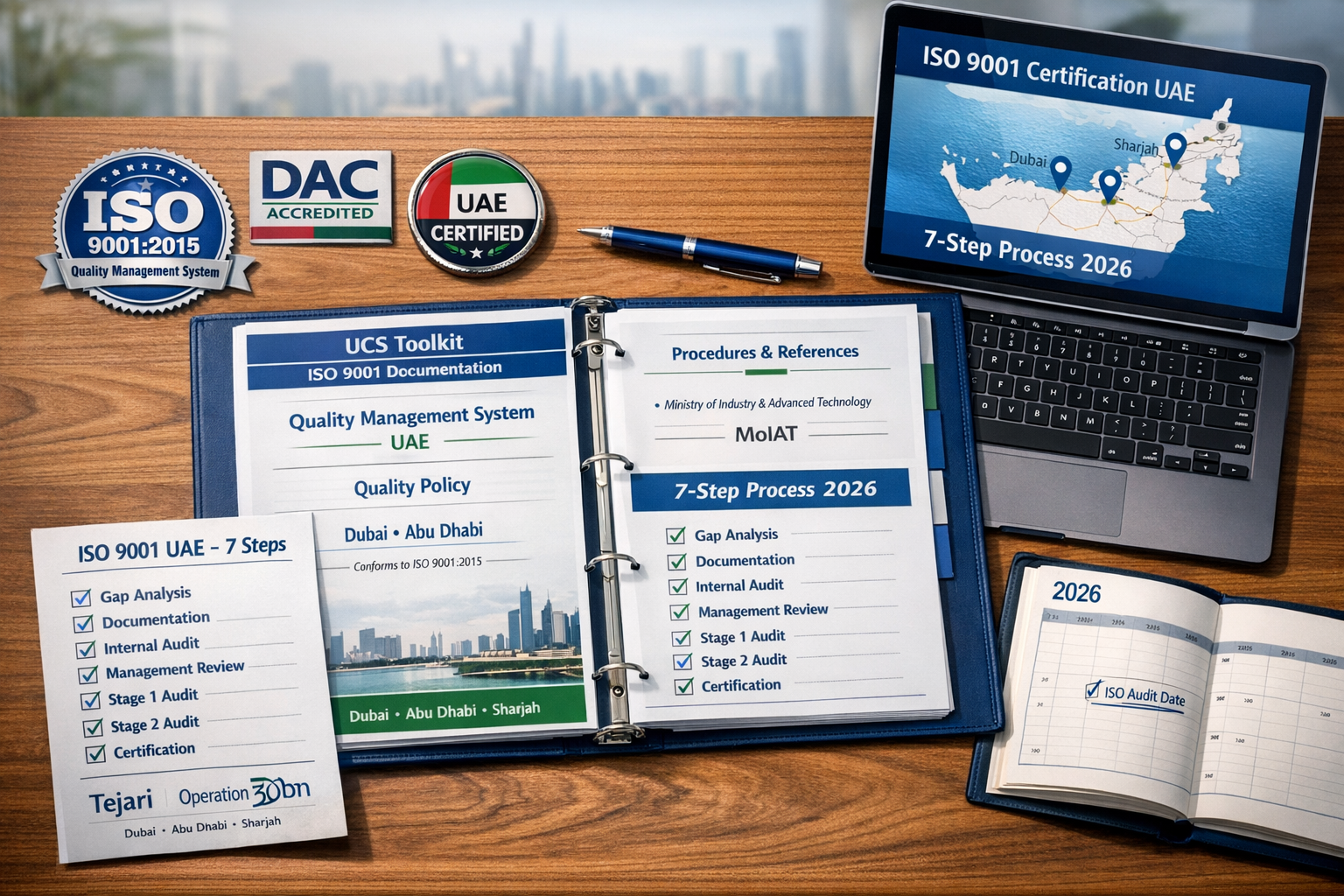
ISO Compliance in the UAE: The Complete Guide
Wiki Article
What Do An Iso Consultant In The UAE Actually Do?
The term 'ISO consultant' is used in a broad sense across the UAE market, and businesses working towards certification for first time usually aren't sure exactly what they're paying when they hire one. Knowing the specifics of the job can help set reasonable expectations and makes it easier to judge whether a particular consultant is providing real value.Translating the ISO Standards into Practical Business terms
ISO requirements are formulated in a formal, generalised language that is designed to apply across countless industries. This means that a large part of a consultant's job is to translate those standards into the meaning they have for a particular company's day-today processes. A good consultant takes the time understanding how an organization actually operates before recommending how its existing processes map onto the standard's requirements.
Conducted the Initial Gap Assessment
Most engagements begin with an organized gap analysis, which involves comparing current practices with the applicable standards to discover what already exists, what requires adjustment, and what's absent completely. This assessment affects the process timeline and budget which is the reason a thorough authentic gap assessment is required more than an optimistic one that overstates what is required.
In assisting in the construction or refinement process of management System Documentation
After identifying any gaps, consultants usually assist in the development or enhance the documentation of policies, procedures and documents required to show compliance, although current standards emphasize genuine commitment to process over volume of paperwork. The most successful consultants push back against the need for excessive documentation just in the name of convenience while recommending a system a business will actually follow over ones designed to simply satisfy an auditor's check list.
The Training Staff is trained on new or modified processes
Implementation isn't an only management-level exercise, as staff of all levels generally need to understand the fundamental changes that are occurring in their daily lives and the reason for it. Consultants usually conduct workshops to foster this understanding, since a management system that only exists on paper, without genuine staff involvement can fall apart quickly once the initial certification pressure has passed.
Conducting Internal Audits Prior to the Real Thing
Most standards require at minimum an internal audit prior to the external certification audit is performed The consultants will typically carry out the audit directly or instruct internal staff on how to conduct an audit. The internal audit is an opportunity to test the waters, uncovering issues when there's time to address them rather than discovering problems for the first time before auditing by an outside party.
Helping the Business through the External Audit
However, consultants shouldn't be present and acting on behalf of the company's behalf in their actual certification audit, due to the need for independence, good consultants prepare businesses extensively prior to the audit and are often ready to help interpret as well as address any ambiguities that the external auditor identifies.
What a Consultant Shouldn't Be Doing
A properly-run consultant should never be the same company that is certifying the certificate, since this could undermine the integrity of the system it depends upon. Any consultant offering to both establish your management system and then issue your certificate under the same roof is a serious warning sign to be taken seriously rather than a convenient shortcut.
Helping interpret Standard Revisions and Updates
ISO standards are periodically revised and a reputable consultant keeps customers informed of upcoming changes well before they become mandatory, giving the business time to adjust instead of rushing at the last minute. This ongoing advisory role continues well beyond the initial certification especially for firms that employ a consultant on a lighter ongoing basis for ongoing surveillance audit assistance.
Rethinking the Way to Work Size
A good consultant scales their approach appropriately depending on the size of their clientele, whether it's a small-scale startup or a large-scale enterprise, as a governing system that is genuinely proportional to business size and complexity is far more likely to be managed effectively than one built on the needs of a much larger company. Beware of a standard template in use regardless of the business's specific size.
Development of internal capability, not Just Dependency
The best consultants are those who aim to leave an organization more self-sufficient than they found it, creating internal staff members who can eventually manage the entire system without causing an ongoing dependency only for their own continued billing. A direct inquiry to a potential consultant about their approach to internal capability creation is a fair method to determine if they're actually focused on the long-term success.
A Timeline to Engage as a Consultant
Businesses often underestimate how early in the certification journey consultants should be engaged, often engaging only after the deadline for engagement is looming. Engaging a consultant early enough in order to conduct a full gap analysis, instead of pressing through implementation under pressure is always a better and more sustainable management process that a more rushed, deadline-driven engagement.
Recognizing When You've Outgrown Your need for a professional
Certain UAE companies, specifically the largest ones that have dedicated quality or compliance personnel are eventually at a stage that they can run ongoing surveillance audits and even routine changeovers in-house. This means they can engage consultants only for consultant input. Being aware of this shift and not having to pay for full assistance from consultants for the duration of time, shows a maturing management system that is now a fundamental part of how a business operates.
In the right way, an ISO specialist in UAE serves more as a paperwork vendor and more like a temporary member to the management team. They help guide businesses through an shift in operations, not just producing documents to satisfy some external requirement. Selecting the right consultant and knowing what their duties should and shouldn't include, makes the difference between a certification project that actually improves the way the company runs and where the certificate is issued without any permanent operational changes to it. This doesn't make the job of a consultant any less valuable, however it does mean businesses should engage in a genuine partnership instead of giving the entire burden of certification to an outside company. This kind of mindset shift alone can lead towards a reliable and long-lasting certification. When approached this way, the engagement is seen as an investment instead of merely a cost of compliance. It's a difference worth noting at all times. Follow the top ISO 27001 Certification for blog advice.
ISO 27001 Certification: Protecting The Privacy Of Data In A Digital-First Uae Economy
With the UAE economy continues its shift towards digital-first banking operations in government services, banking health, retail and more, information security has moved from being a simple IT concern to a genuine corporate priority at the level of the board. ISO 27001, the international standard for the management of information security systems, is now the most well-known method for UAE companies to show that they adhere to this responsibility seriously.What ISO 27001 Actually Covers
The standard provides a well-defined procedure for identifying and assessing information security risks, such as security breaches, cyberattacks physical security vulnerabilities, or internal process failures and implementing appropriate controls to address the risks. Rather than mandating a specific technological solution, it merely asks companies to comprehend their own information assets as well as the risks they pose, before deciding to choose and put in place controls that are appropriate to those risks.
What's the reason UAE Businesses Are Putting It First
Beyond the increasing expectations of clients, UAE regulatory developments around data security have created institutions under pressure to implement more secure security procedures for information, specifically for businesses that handle personal data including financial data, health records. ISO 27001 certification gives businesses an accepted, independently audited method to show compliance readiness rather than merely stating good security procedures internally.
Sectors that carry particular Its Weight
Healthcare, financial services institutions, government-linked entities, as well as firms that handle data of clients are all subject to a particular level of scrutiny over security of their information. certification has become close to a standard requirement in tender processes in these sectors. As a trend, businesses in adjoining industries that process significant volumes of client information are striving for the certification as well, knowing that the requirements for data security are growing across the board instead of being confined only to certain industries with high risk.
Its Risk Assessment Process Is Central
A thorough and well-constructed risk assessment forms the basis of a successful ISO 27001 implementation, since everything in the standard's structure is dependent upon companies being honest about which areas of vulnerability they're most vulnerable to instead of using a generic security checklist. This typically involves organising information assets, evaluating threats and vulnerabilities in each and prioritising controls based on genuine risk level rather than ease of use.
Technical Controls Make Only A Part of the Story
While encryption, firewalls and access controls are important, ISO 27001 places equal importance to organizational controls that include awareness training for staff in clear incident-response procedures, and supplier security requirements. The majority of security incidents stem from human errors or processes that are not working and not purely technical vulnerabilities and this is why ISO 27001 standard considers people and processes controls with the same respect as technology.
The Certification Process
As with all management system standards, certification requires an initial gap analysis that is followed by the implementation of all necessary controls and documentation along with an internal review and an external audit that is two-stage by an accredited certification body to be followed by annual audits to check that the system remains properly maintained.
The ongoing relevance of this issue in a changing Threat Landscape
Security threats for information are constantly evolving When properly implemented, an ISO 27001 management system is built around continual monitoring and improving rather than a fixed set-up of controls made once, and then kept unchanged. Organizations that consider certification to be an ongoing practice, rather than an event in itself are more likely to have a greater security in the course of time.
Third-Party Risk and Supplier Risk Draws The Attention of a Governing Body
A significant percentage of information security incidents originate through third-party providers and partners, rather than an organisation's direct systems which is why ISO 27001 requires businesses to be able to assess and manage the security risks that their supply chain creates. This has led many certified UAE businesses to formalize security requirements in their own agreements with suppliers, spreading its influence beyond the business that is certified.
Achieving a True Security Culture that is more than just a collection of rules
The most efficient ISO 27001 implementations go beyond the production of policies documents and embed security awareness into everyday behaviors of staff, from how the handling of emails is done to how physically accessing sensitive locations is managed. Auditors are more likely to test the understanding of staff through audits instead of relying exclusively on documentation review. This is why genuine the involvement of staff a crucial factor to a successful certification.
Preparing for the Regulatory Alignment
A lot of UAE businesses pursuing ISO 27001 do so partly to prepare themselves for compliance with a variety of local data privacy laws, as the approach based on risk maps fairly well to the type that of accountability, control, and transparency expectations found in modern legislation governing data security. Businesses that are certified often are significantly better placed to show conformity to regulations when new ones arrive in force.
A Credential that Signals Real Maturity
Clients and partners can evaluate the UAE business's cybersecurity posture, ISO 27001 certification signals something far more valuable than an internal claim that the company is taking security seriously. It is a proof of independent verification against a genuinely stringent international standard. In a world that is increasingly based on trust in technology, this assurance has real business value.
Handling Clouds and Third-Party Hosts Tips
Many UAE enterprises are now heavily relying on cloud infrastructure and third-party providers of hosting and ISO 27001 requires genuine assessment of the security risks it creates, not just assuming that a trusted cloud provider automatically will cover all the security requirements. Understanding exactly where a cloud provider's security obligation ends and the certified business's own responsibility begins is an aspect that has a big impact on the number of new applicants.
For UAE companies who operate in a digitally-driven business environment, ISO 27001 certification offers the chance to compete for a certification and also a authentic, structured approach to managing the security risks to information associated with handling client and company data in a responsible way. With expectations for data protection continuing to increase throughout the UAE those who invest in information security maturity are more likely to be significantly better prepared for whatever new regulatory and client expectations come next. This won't need to be done overnight, since an incremental approach to implementation that prioritizes the most vulnerable areas first, tends to produce stronger, more deeply embedded security culture than attempting all at once under the pressure of time. Businesses that start this process sooner rather than later will typically have a better chance of being ready for whatever will come up. Security, if handled in this manner is now a genuine competitive advantage, not just the cost of defense. A shift in how you frame the issue changes how the entire project is allocated internally. The companies that acknowledge this at the earliest time are likely to reap the most. Read the top rated ISO Certification Dubai for more tips.